ARC Services Portal
Advanced Research Computing
2026-03-20
The ARC Services Portal
What went well, what didn’t go so well, lessons learned.
First: what is it?
- Management interface + datastore for UCL’s Information Governance Assurance function
- Replacing existing portal which has been running for >10 years
- Source of truth of unique identifiers, approval status, privileged roles for all registered research involving sensitive data at UCL
- Current Portal built with SharePoint lists as the datastore, workflows and logic built with Power Automate
First: what is it?
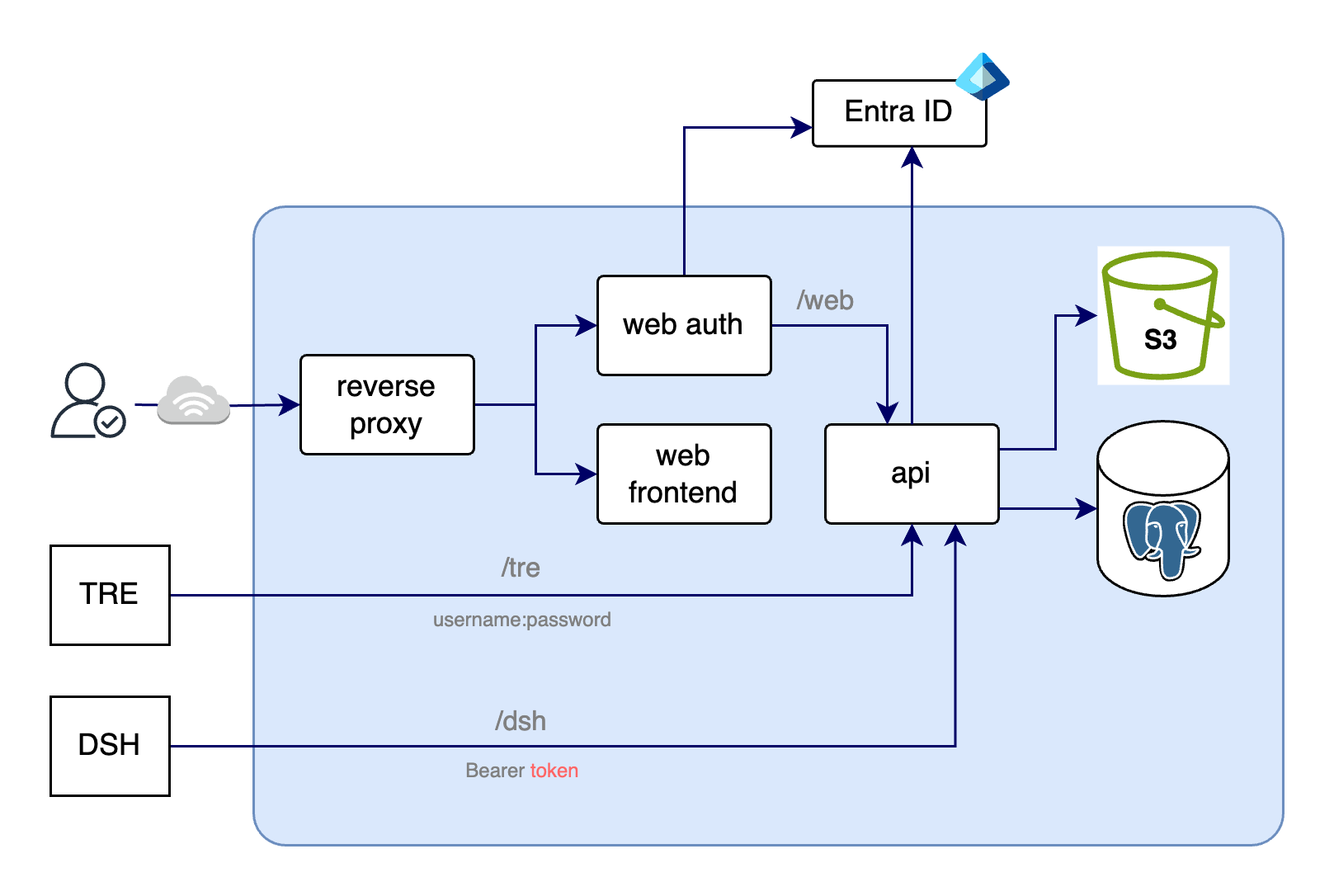
A 3-tier web app following Twelve-Factor App thinking
- Go for backend services
- React (NextJS) for the frontend
- Docker for containerized development and deployment
- Nginx as a reverse proxy in dev
- PostgreSQL as the database
- Cypress for end-to-end testing
- S3 for object storage
First: what is it?
Runs on EKS in production, expected to serve 1000s of users:
- Fronts UCL’s Trusted Research Envrionments
- User registration and profile creation
- Study creation: information governance construct for assurance and compliance
- Project creation and management: to access resources in technical envrionemnts
First: what is it?
- But: extensible to allow reuse of profile for more UCL computing services
- Research Data Storage Services
- Electronic Research Notebook
First: what is it?
Information at beginning
- High level functional requirements well defined
- Implementation of existing portal very murky
- Maintainer of portal left UCL in June 2025
- Wasn’t even the original creator
- Serious data quality issues in existing portal
- Development resource constrained
The Ambition
Create a tool which not only helps users and UCL satisfy regulatory and statutory obligations, but a tool that is genuinely useful and facilitates better research outputs.
Where are we now?
The ARC Services Portal is live:
- Users profile and onboarding functionality ✅
- Study creation, review & approval, management ✅
- Project creation, management 🛠️
Data migration time…
Migration Options
Symmetrical incremental
Least pressure on devs, most fragmented UX
☹️
Asymmetrical incremental
ARC TRE first, perhaps middle path for all
🙃
Big bang: all at once
Best for users, worst for developers!
🥴
Migration TBC…
What went well?
1. Clear communication among a capable team
Really natural blend of Agile, Scrum and Kanban
→ this is how development frameworks are best used
- Standups, sprint planning, focused issue-driven feature development
2. Fast feedback in ignorance of current platform’s internals
It’s difficult to replace a piece of software:
- Users are familiar with the existing system
- Users dislike some things - but love other things!
- Tension between these two things needs careful management
- Many stakeholders: Info Gov admins, TRE Ops staff, compliance teams, portal developers, senior leadership, service owners… and users!
3. Success in achieving consensus on difficult design choices
- Options papers
- Endorsement from Design Authorities
- Justified departure from strategic heuristics
- Triumph of adverserial and open discussion
What didn’t go so well?
1. Detail in issues peaked and troughed
Often team members on the same page, but sometimes not:
- Pick up an issue and start development, only to realise later the necessary detail wasn’t there
- Kept happening even after we started noticing it!
- At times understandable due to the complex nature of the logic being implemented
2. Estimating timeframes
This didn’t go particualrly badly by any stretch of the imagination, but:
- Estimating delivery of things is hard! Particularly in the world of unknown unknowns.
- Tempting to resort to “We’re being Agile!” (== “Stop asking us difficult questions!”)
Lessons learned
1. Communicate often, ask stupid questions
- Really important to get everyone on the same page
- In a team with no egos it’s easier to ask the stupid (best) questions
2. Be disciplined with issue details
- Can be difficult, but if you don’t know details, say you don’t know
- Treat the issues and project board as gospel == one source of truth for everyone
3. Have difficult conversations early
- Especially with senior or busy stakeholders, book early, and provide materials beforehand.
- Less a lesson learned and more a trick to repeat next time!
Thanks!
ARC Services Portal | https://finleybacon.github.io/presentations/